


.jpg)

Glossary of Blending Terms
| Keyword | Description |
|---|---|
| A Metropolitan Area | The recombination of small, dispersed particles into larger particles. This is generally caused by a rearrangement of surface forces resulting from a change in the environment. It is the opposite of dispersion. |
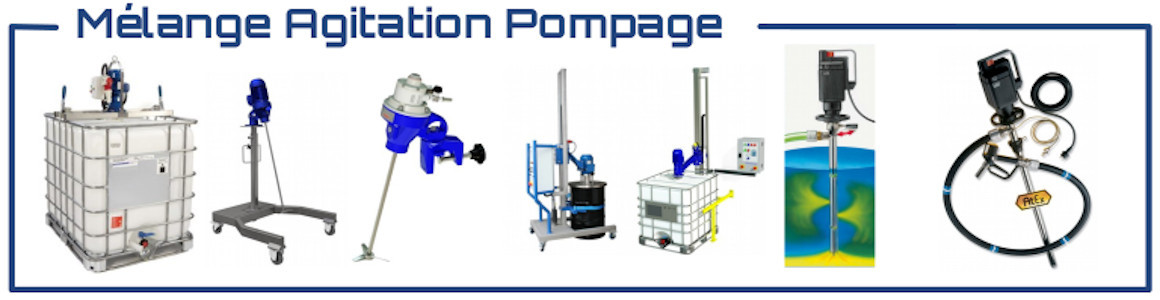
| Agitation | A device consisting of a drive, a shaft, and a propeller for agitating the contents of a vessel. Also known as a blender. |
| Anchor paddle | A wheel with a large diameter and a shape resembling an anchor. The outline closely follows the bottom and sides of the ship. See "Types of Wheels." |
| Apparent Viscosity | Flow resistance of a non-Newtonian fluid at an arbitrary point on its stress-flow curve. |
| Axial Flow | The movement of a fluid in a tank, which generally flows from the top to the bottom of a ship. |
| Axial Wheel | A turbine with blades inclined at 45° that produces fluid flow in the axial direction. See "Types of Wheels." |
| Baffle | A fixed device installed on or near a tank wall to prevent liquid turbulence and create a vertical flow. See "Speaker Cabinets." |
| Blade | One of the blades of a water wheel—not to be confused with the entire water wheel. |
| Mixing Time | The time required to mix the contents of the vessels. This time depends on the viscosity of the materials. |
| Mixture | Mix two of the most miscible liquids to form a uniform mixture. |
| Cutting Bars | More commonly known as beaver tails—or beaver tail deflectors. Beaver tails are wide deflectors used when the reservoir in which they are located cannot be modified (for example, deflectors welded to the walls). Thus, two beaver tails are typically suspended from the bridge and in the basin. |
| Density | The density of a granule, including the voids between the particles. It's always less than the actual density. |
| Centipoise / Centistoke | Standard units of viscosity. See viscosity. |
| Consistency | The resistance of a fluid subjected to shear stress. |
| Critical Speed | The rotational speed is equal to the natural frequency of the shaft and the wheel. This can also be affected by the mounting structure. |
| Crystallization | The formation of a solid from a liquid solution. This is the opposite of dissolution. |
| Density | The mass per unit volume of a substance. See the density. |
| Expanding Fluid | A fluid in which the viscosity increases as the shear rate increases. It's the opposite of a "pseudo-plastic." |
| Dispersion | A two-phase system in which one phase is broken down into discrete particles surrounded by the second phase. When mixing, the second phase is usually liquid. |
| Draft Tube | A hollow, stationary tube mounted concentrically with the wheel and above it. This promotes increased vertical flow during mixing. |
| Driving | The part of the agitator responsible for converting the supplied power into mechanical energy for mixing. The drive can be electric or pneumatic, direct-drive or gear-driven. |
| Dries Well | If drive lubricant were to leak from the oil seals, it would be collected in the sump. This collection area includes an oil sensor that is triggered by an oil leak. |
| Emulsion | A colloidal dispersion of at least two immiscible liquids. |
| Flash Blender | A mixer blended only small quantities of additive into a continuous flow with an extremely short residence time. It generally refers to the addition of chemicals that promote flocculation in water and wastewater treatment. |
| Flocculation | A mixing process that causes fine particles to collide and agglomerate into larger particles. The process also involves using fine particles to bind to larger particles, so that they can be separated from the liquid more easily. |
| Impeller Housing | An anchor wheel with additional horizontal and vertical blades. See "Types of Wheels." |
| Helical Gears | A gear with helical teeth that is used to connect parallel or non-intersecting shafts. |
| Blend until smooth | Homogenization, or a homogeneous mixture, involves mixing the components to make them uniform throughout the mixture. As a result, the composition of the mixture is the same throughout. |
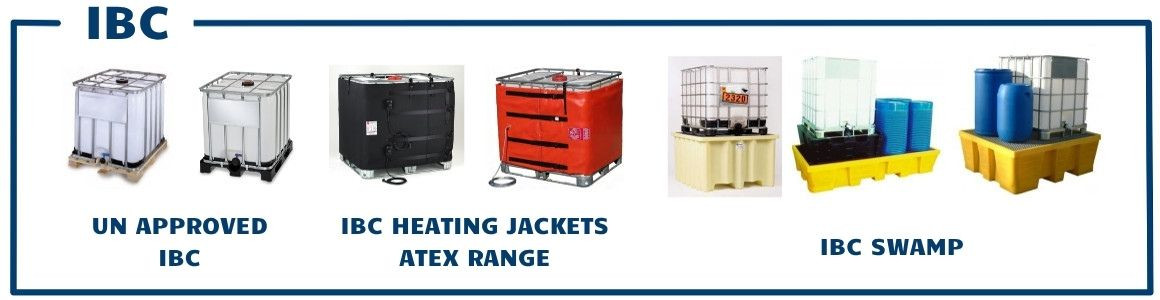
| IBCs | Container for bulk goods, tank, or pallet. This is a reusable industrial container that can be used for the transport and general storage of chemicals and solvents. |
| IBC Mixer | Industrial mixer designed for use with large bulk containers (IBCs) |
| Paddle Wheel | The part of the mixer that applies force to the materials being mixed. See "Types of Wheels" for information on the different types of wheels. |
| Krebs Unit (KU) | A common method for determining the consistency of paint and other coatings. |
| Laminar Flow | A fluid flow characterized by multiple long, smooth, layered flow streams moving in the same direction as the majority of the flow, with little interaction among them. See Turbulent flow and viscosity. |
| Liquid | A liquid is a substance that is not a solid but flows and can be poured; for example, water. |
| Liquid Solution | A liquid solution is a liquid in which a substance has been completely dissolved. The substance can be a solid, a gas, or another liquid. |
| Mechanical Seal | A pressure seal at the point where the lower shaft enters the reservoir. The seal consists of a stationary ring and a rotating ring that turns with the shaft. These two rings are connected to each other by the reservoir or by springs. For much higher pressures, a double mechanical seal consisting of two seals housed in a pressure-tight casing can be used. |
| Blender | Machines designed to provide agitation. See Agitator. |
| Mixture | Mixing is the process of increasing the homogeneity of a product, usually by applying mechanical energy to it. |
| Newtonian fluid | A fluid in which the flow state is proportional to the applied stress. Consequently, the fluid's viscosity is constant and independent of the shear rate. See viscosity. |
| Non-Newtonian Fluid | A fluid in which the flow state is not proportional to the applied stress. Consequently, the viscosity of fluids is variable and may change with shear rate, time, or a combination of both. See Dilatant, Pseudoplastic, Thixotropic, and Viscosity. |
| Paddle | A two-bladed impeller. The diameter of a paddle is generally greater than 60% of the tank's diameter. |
| Particle Diameter | The average particle diameter in a solid suspension application. Usually measured in microns (µm) |
| Not | On a paddlewheel, the pitch is the angle of the blades relative to the horizontal plane. See "Types of Wheels." |
| Balance | The absolute unit of viscosity. One Poise is equal to one hundred Centipoises. See Viscosity.docx |
| Number of Power | A dimensionless ratio used to calculate the turbine's power loads. |
| Propeller | A paddlewheel with three or four helical blades that produces an axial flow. See "Types of Wheels." |
| Proximity Factor | This is a correction factor used in calculating the impeller power. It allows for geometric variations such as: the distance from the bottom of the turbine to the tank and the distance from the top of the turbine to the liquid. |
| Pseudoplastic Liquid | A liquid or slurry whose viscosity decreases as the shear rate increases. |
| Pumping Rate | The volumetric discharge rate, measured at the impeller, when it is operating at a given speed. |
| Radial Flow | The movement of fluid in a tank—usually from the center of the tank toward the wall. Radial flow is necessary in heat transfer applications. |
| Radial Wheel | A turbine, or a turbine with vertically mounted blades, designed to discharge fluid in a radial direction. See "Types of Wheels." |
| High-Speed Mixer | See the flash blender |
| Length of Stay | The average length of time a process component remains in a mixing environment in a continuous process. |
| Reynolds Number | A dimensionless number used to characterize fluid flow. It is the ratio of inertial forces to viscous forces. |
| Scrapers | Articulated or flexible components that are attached to the outer edge of an anchor paddle wheel. They are used to scrape the walls of the vessel to prevent any concentrated buildup. |
| Service Factor | A numerical classification system for gear systems, based on gear operating time, gear type/drive, and required service. |
| Speed Adjustment | The speed of a particle falling freely under the influence of gravity when it is in a fluid. |
| Mowing | When applied to a mixture of liquids, shear is the action that produces mixing at the molecular and microscopic levels. Shear may be desirable when mixing liquids, but it can also be an undesirable property. |
| Rebel | A sealing device that is attached to a rod above the liquid level to prevent the liquid from splashing or to be mounted on the shaft. |
| Mud | A mixture of liquids and insoluble solids. See "Solid Suspension." |
| Sturdy Suspension | A mixture of a liquid and insoluble solids, typically a slurry. There are three degrees of solid suspension in liquid mixtures: 1. Uniform — Where the heaviest particles frequently rise to the surface and are distributed uniformly. 2. Off Bottom - Where solid particles are lifted from the bottom but not upward. 3. At the bottom—Solid particles are kept in motion, but some particles may settle at the bottom of the tank. |
| Wetting of Solids | Disperse solid particles so that each particle is coated with a liquid film. |
| Specific Gravity | A measure of the density of any material relative to the density of water under standard conditions. See the density. |
| Spiral Bevel Gears | A type of gear with a curved tooth used to connect intersecting shafts. |
| Helical Gear | A propeller consisting of narrow strips wound in a spiral around a central shaft. These strips are connected to the rod by several arms. It is common for the coil to have a diameter close to that of the blood vessel. |
| Stabilizing Drift | Additional blades attached to a wheel direct the fluid flow created by rotation to counteract the bending of the shaft. This allows agitators to have longer shafts without a stable bearing. |
| Smooth Ride | A radial shaft support bearing mounted at the bottom of the ship helps reduce deflection in longer shafts. |
| Stuffing Box | A pressure seal at the point where the mixer shaft enters the container. A packing box consists of a tube fixed around the shaft, with several rings of braided packing that fit snugly into the space between the tube and the shaft. It often includes a means of lubricating the packing. |
| Tourbillon | Rotation of a liquid around the mixer shaft, resulting in little movement within the liquid itself. |
| Thixotropic | A material whose viscosity will gradually decrease at a constant shear rate. As opposed to any material whose viscosity changes immediately in response to a change in shear rate. |
| Turbine | A multi-bladed wheel with relatively short blades. The wheel-to-tank ratio tends to range from 0.2 to 0.5 for turbines. See "Types of Wheels." |
| Turbulent Flow | When a fluid or gas undergoes irregular fluctuations, it is considered a laminar flow. In turbulent flow, the fluid velocity constantly changes in both magnitude and direction. See viscosity. |
| Viscosity | A measure of a fluid's resistance to flow when a force is applied to it. - Absolute viscosity is measured in centipoise (cp.). At room temperature, water has a viscosity of 1 cp. - KINEMATIC VISCOSITY is measured in various ways depending on the measuring instrument. Since it can be converted to centistokes, centipoise is equal to centistokes multiplied by the density of a fluid. See viscosity. |
| Viscosity Cup | A standard tool for measuring kinematic viscosity. Types of viscosity cups include: DIN, ISO, Shell, etc. See Viscosity Cups for more information. |
| Viscosity Factor | The correction factor applied to a standard wheel draw value to account for the difference caused by a high-viscosity liquid. |
| Vortex | When a stirrer swirls the liquid, a low-pressure area forms at the liquid's surface, like a whirlpool. This is called a vortex. |
| Anchorage | A term used to describe the dispersion of solid particles such that each particle is coated with a liquid film or dissolved in a solution. |
| Worm Gears | Gears allow for a greater speed reduction between shafts that do not intersect, with the shafts forming a 90° angle with respect to one another. |