 |
1H2/X295/S
1A1/Y1.4/150/
1A2/Y150/S
4H2V/X36/S
|
4GV/X68/S
1A2T/Y350/S
1H1/Y1.4/100
4C1/Y300/S
|
 |
.jpg)





 Fuel Distribution
The transport of fuel is regulated by the ADR:
In Chapters 1.1.3.1 and 1.1.3.3, the ADR specifies the possible exemptions for fuel transport. If you do not fully qualify for the exemptions, then the ADR applies.
If you qualify for an exemption, the “polluter pays” principle applies. To prevent an accident:
Use packaging that is in good condition and sturdy;
secure it properly during transport;
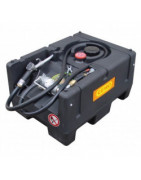
use a pump with an integrated leak-proof
nozzle; store your containers in a containment
area; for highly flammable products such as gasoline, use ATEX-certified equipment for electric pumps and follow basic safety guidelines.
If you qualify for an exemption, the “polluter pays” principle applies. To prevent an accident:
Use packaging that is in good condition and sturdy;
secure it properly during transport;
use a pump with an integrated leak-proof
nozzle; store your containers in a containment
area; for highly flammable products such as gasoline, use ATEX-certified equipment for electric pumps and follow basic safety guidelines.
1.1.3.1 Exemptions Based on the Nature of the Transport Operation
The ADR
requirements do not apply:
requirements do not apply:
(a) to the transport of dangerous goods by private individuals when the goods in question are packaged for retail sale and are intended for their personal or domestic use or for their recreational or sporting activities, provided that measures are taken to prevent any leakage of contents under normal conditions of transport. When these goods are flammable liquids transported in refillable containers filled by or for a private individual, the total quantity must not exceed 60 liters per container and 240 liters per transport unit. Dangerous goods in IBCs, large packagings, or tanks are not considered to be packaged for retail sale;
(b) the transportation of machinery or equipment not specified in this Annex that
incidentally contain dangerous goods in their structure or operating system, provided that measures are taken to prevent any leakage of contents under normal conditions of transport;
(c) to transport carried out by companies but incidental to their main business, such as supplying construction or civil engineering sites, or for return trips from such sites, or for surveying, repair, and maintenance work, in quantities not exceeding 450 liters per package, including intermediate bulk containers (IBCs) and large packages, nor the maximum total quantities specified in 1.1.3.6. Measures must be taken to prevent any leakage under normal conditions of transport.
These exemptions do not apply to Class 7.
However, shipments carried out by such enterprises for their own external or internal supply or distribution are not covered by this exemption;
(d) shipments carried out by the competent authorities for emergency response operations or under their control, to the extent that such shipments are necessary in connection with emergency response operations, in particular shipments carried out:
- by recovery vehicles transporting damaged or broken-down vehicles containing dangerous goods; or
- to contain, recover, and transport dangerous goods involved in an incident or accident to the nearest appropriate safe location;
e) emergency transport intended to save human lives or protect the environment, provided that all measures are taken to ensure that such transport is carried out safely;
f) the transport of empty, uncleaned fixed storage tanks that have contained Class 2 gases of Groups A, O, or F, substances in Packing Groups II or III of Classes 3 or 9, or pesticides in Packing Groups II or III of Class 6.1, under the following conditions:
- all openings, with the exception of pressure-relief devices (where installed), are tightly sealed;
- measures have been taken to prevent any leakage of contents under normal conditions of transport;
and- the load is secured on cradles, in crates, or in any other handling device, or secured to the vehicle or container in such a way that it cannot shift or move under normal conditions of transport.
This exemption does not apply to fixed storage tanks that have contained desensitized explosive materials or materials whose transport is prohibited by the ADR.
NOTE: For radioactive materials, see also 1.7.1.4.1.1.3.3
Exemptions relating to the transport of liquid
fuels The provisions of the ADR do not apply to the transport of:
(a) fuel contained in the tanks of a vehicle performing a transport operation and intended for the propulsion of the vehicle or for the operation of any of its equipment used or intended for use during transport.
Fuel may be carried in fixed fuel tanks directly connected to the vehicle’s engine or auxiliary equipment that comply with the appropriate regulatory provisions, or it may be carried in portable fuel containers such as jerry cans.
The total capacity of fixed fuel tanks must not exceed 1,500 liters per transport unit, and the capacity of a fuel tank attached to a trailer must not exceed 500 liters. A maximum of 60 liters per transport unit may be carried in portable fuel containers.
These restrictions do not apply to emergency response vehicles;
(b) fuel contained in the tanks of vehicles or other means of transport (e.g., boats) that are being transported as cargo, when intended for their propulsion or for the operation of any of their equipment. Any supply valve located between the engine or equipment and the fuel tank must be closed during transport, unless it is essential for the equipment to remain operational. Where applicable, vehicles or other means of transport must be loaded upright and secured to prevent them from falling over;
(c) fuel contained in the tanks of a non-road mobile machine 1 that is transported as cargo, when it is intended for the machine’s propulsion or for the operation of one of its pieces of equipment. The fuel may be transported in fixed tanks directly connected to the engine and/or auxiliary equipment and that comply with regulatory requirements. Where applicable, such machines must be loaded in an upright position and secured to prevent them from falling over.
- all openings, with the exception of pressure-relief devices (where installed), are tightly sealed;
- measures have been taken to prevent any leakage of contents under normal conditions of transport;
and- the load is secured on cradles, in crates, or in any other handling device, or secured to the vehicle or container in such a way that it cannot shift or move under normal conditions of transport.
This exemption does not apply to fixed storage tanks that have contained desensitized explosive materials or materials whose transport is prohibited by the ADR.
NOTE: For radioactive materials, see also 1.7.1.4.1.1.3.3
Exemptions relating to the transport of liquid
fuels The provisions of the ADR do not apply to the transport of:
(a) fuel contained in the tanks of a vehicle performing a transport operation and intended for the propulsion of the vehicle or for the operation of any of its equipment used or intended for use during transport.
Fuel may be carried in fixed fuel tanks directly connected to the vehicle’s engine or auxiliary equipment that comply with the appropriate regulatory provisions, or it may be carried in portable fuel containers such as jerry cans.
The total capacity of fixed fuel tanks must not exceed 1,500 liters per transport unit, and the capacity of a fuel tank attached to a trailer must not exceed 500 liters. A maximum of 60 liters per transport unit may be carried in portable fuel containers.
These restrictions do not apply to emergency response vehicles;
(b) fuel contained in the tanks of vehicles or other means of transport (e.g., boats) that are being transported as cargo, when intended for their propulsion or for the operation of any of their equipment. Any supply valve located between the engine or equipment and the fuel tank must be closed during transport, unless it is essential for the equipment to remain operational. Where applicable, vehicles or other means of transport must be loaded upright and secured to prevent them from falling over;
(c) fuel contained in the tanks of a non-road mobile machine 1 that is transported as cargo, when it is intended for the machine’s propulsion or for the operation of one of its pieces of equipment. The fuel may be transported in fixed tanks directly connected to the engine and/or auxiliary equipment and that comply with regulatory requirements. Where applicable, such machines must be loaded in an upright position and secured to prevent them from falling over.